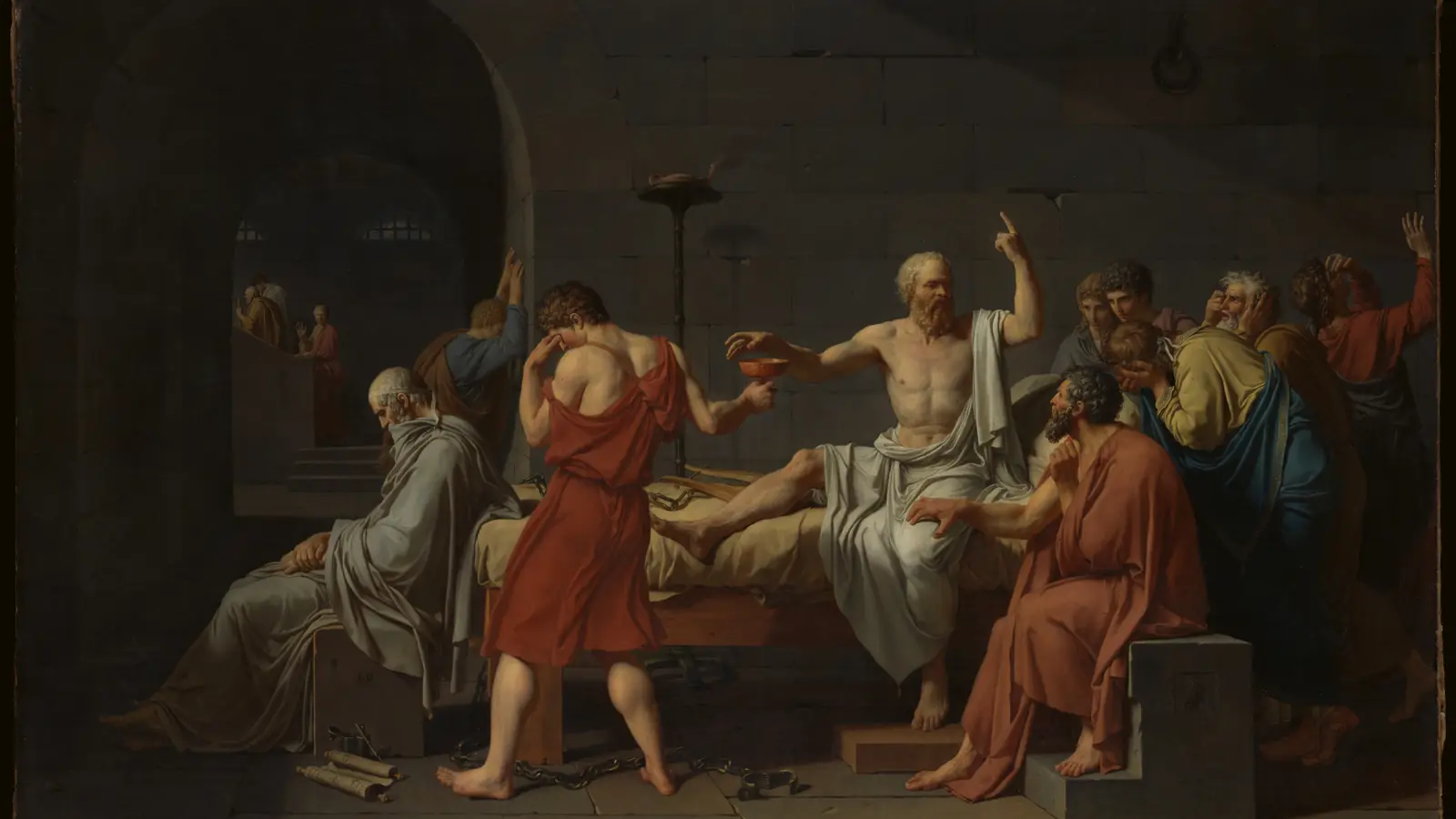
THE ARTICLE · 8 MIN
The Ripple Effect of Creating Positive Change
The idea behind this page is simple: change starts with one person’s conduct and spreads to the people who see it. Gandhi’s name is often attached to it, usually through one line.
“Be the change you wish to see in the world.” — widely credited to Gandhi, but not found in his writings.
The nearest passage he wrote is in a 1913 article on snake-bite in his South African newspaper, Indian Opinion, published in Gujarati and translated in his Collected Works:
“We but mirror the world. All the tendencies present in the outer world are to be found in the world of our body. If we could change ourselves, the tendencies in the world would also change. As a man changes his own nature, so does the attitude of the world change towards him. … We need not wait to see what others do.”
Gandhi died in 1948. The earliest close match to the popular line that Quote Investigator found is from 1974: “be the change you want to see happen”, in a book chapter by the educator Arleen Lorrance.
The 1913 passage says more than the slogan does. It ties change in the world to change in yourself, and it ends with a reason to start now rather than wait for others.
The words Gandhi used
The four principles on this page (nonviolence, truth, love and self-discipline) are popular English shorthand. The terms Gandhi used are more specific.
- Satyagraha. In September 1906, Indians in the Transvaal pledged to resist a new registration ordinance. Gandhi at first called the campaign “passive resistance”, then ran a small prize in Indian Opinion for a better name. Maganlal Gandhi suggested sadagraha, “firmness in a good cause”, and Gandhi changed it to satyagraha: “Truth (Satya) implies love, and firmness (agraha) engenders and therefore serves as a synonym for force.” He called it “the Force which is born of Truth and Love or non-violence”.
- Accepting the penalty. In Hind Swaraj he put the method this way: “If I do not obey the law and accept the penalty for its breach, I use soul-force.” In 1920 he added that non-violence “does not mean meek submission to the will of the evil-doer, but it means the putting of one’s whole soul against the will of the tyrant.”
- Swaraj. Self-rule, in two senses: independence for India, and rule over oneself. “It is Swaraj when we learn to rule ourselves,” he wrote in Hind Swaraj.
- Brahmacharya. The “self-discipline” of the popular version. Gandhi described it as the “control in thought, word and action, of all the senses at all times and in all places” (Young India, 1924).
Gandhi’s Principles in Action
Each principle below is paired with an example. The examples illustrate the idea; except where the page says so, they are not claims that the people involved took their lead from Gandhi.
Principle 1: Nonviolence
For Gandhi, nonviolence was a choice made from strength, not a way of avoiding a fight. In his 1920 essay “The Doctrine of the Sword” he went as far as this: “I do believe that where there is only a choice between cowardice and violence I would advise violence.” What he asked for instead was the harder third option.
The clearest case of his method travelling is the American civil rights movement. Martin Luther King Jr. first used nonviolent direct action in the Montgomery bus boycott of 1955–56, and wrote in 1960: “Christ furnished the spirit and motivation while Gandhi furnished the method.”
Principle 2: Truth
In Gandhi’s own gloss, truth and love come together: “Truth (Satya) implies love.” A modern parallel is investigative journalism, which works by publishing what can be shown and letting it change what people do.
Principle 3: Love
The example here is Médecins Sans Frontières (Doctors Without Borders), awarded the Nobel Peace Prize in 1999 “in recognition of the organisation’s pioneering humanitarian work on several continents.”
The same 1920 essay has Gandhi’s view of forgiveness: “forgiveness is more manly than punishment”, but “abstinence is forgiveness only when there is the power to punish”.
“The weak can never forgive. Forgiveness is the attribute of the strong.” — Gandhi, answering a question from the press in Karachi after the executions of Bhagat Singh and his comrades, as reported in Young India, 2 April 1931. He had been asked whether it was impolitic to forgive a government “guilty of a thousand murders”.
Principle 4: Self-Discipline
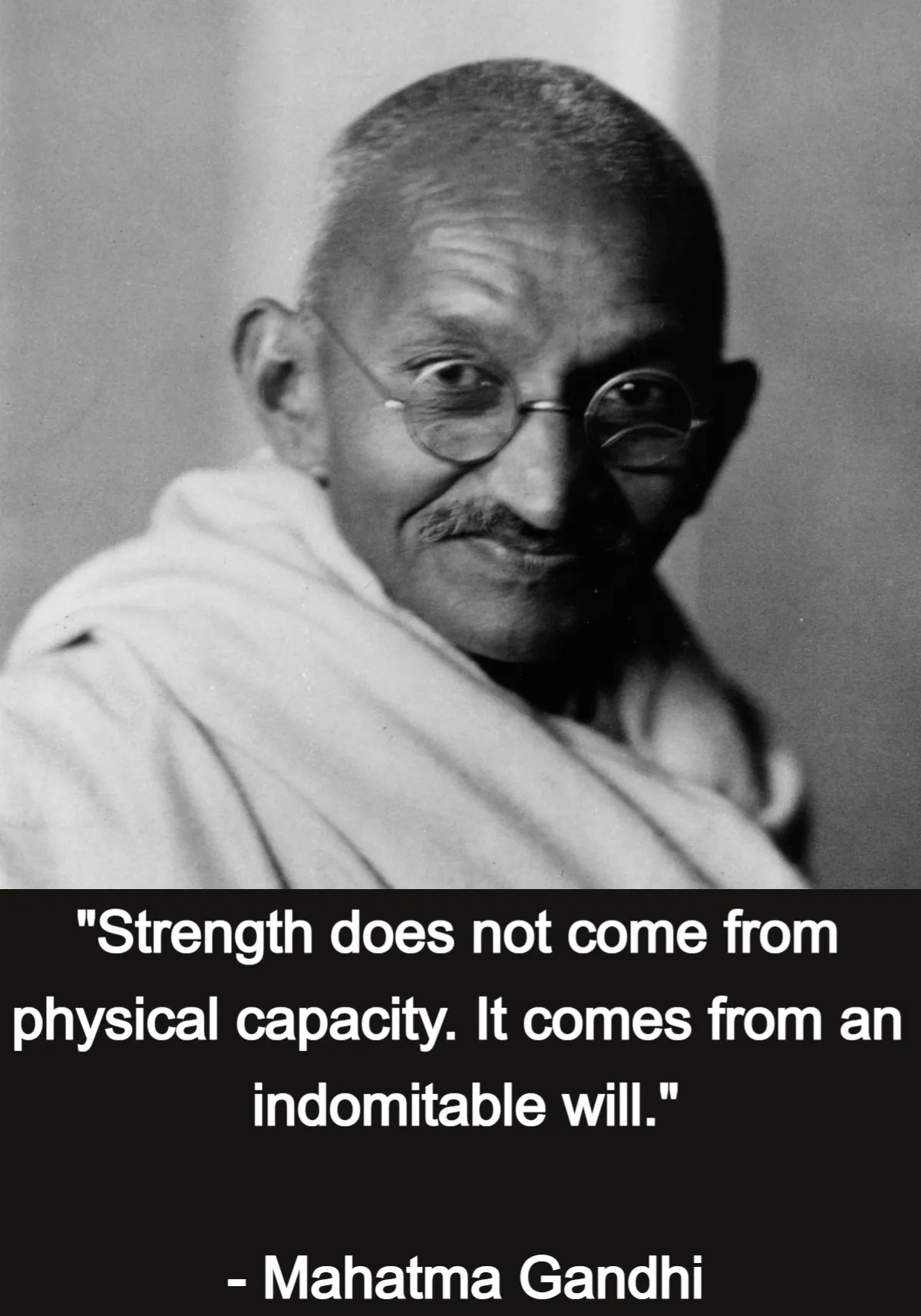
“Strength does not come from physical capacity. It comes from an indomitable will,” Gandhi wrote in “The Doctrine of the Sword”. The example here is environmental work that depends on steady, unglamorous effort, such as the Green Belt Movement below.
The Ripple Effect of Gandhi’s Principles in Action
Example 1: The Salt March
Gandhi and a group of volunteers left Sabarmati on 12 March 1930 and walked to Dandi on the coast, in protest at the British salt laws, under which the colonial government collected a tax on salt. Sources give the distance as between 200 and 241 miles. They reached Dandi on 5 April, and early the next morning Gandhi walked down to the sea to make salt.
It was easy to copy. In the coastal cities of Bombay and Karachi, crowds made salt too, and British authorities arrested more than 60,000 people. It did not end British rule by itself: after about a year of struggle, Gandhi negotiated a truce with the British government.
Example 2: The Green Belt Movement
The Green Belt Movement was founded in 1977 by Wangari Maathai, under the auspices of the National Council of Women of Kenya. It encouraged women to plant trees in their local environments; it spread to other African countries and contributed to the planting of over thirty million trees. Maathai won the Nobel Peace Prize in 2004, the first African woman to receive it.
Example 3: The Legacy of Dr. Martin Luther King Jr.
King travelled to India in 1959 and met the Gandhi family. He received the Nobel Peace Prize in 1964. His own account of his thinking, written for The Christian Century, credits Gandhi with the method and Christ with the spirit.
The fuller picture
Gandhi’s methods changed the twentieth century. His record also includes things that are hard to defend, and they belong on the page too.
- Race. In an 1894 open letter from Durban he complained that the colony regarded Indians as “little better, if at all, than savages or the Natives of Africa”, and that the Indian was “being dragged down to the position of” Black Africans, for whom he used a racial slur. In December 2018 the University of Ghana removed a statue of him after lecturers petitioned against it, calling him “racist”.
- His marriage. The historian Vinay Lal notes that Gandhi’s own autobiography records sharp disagreements with his wife, Kasturba, in the first two decades of their marriage, when he “unreasonably sought to bring her under his control”.
- The 1940s experiments. After Kasturba’s death in 1944, Gandhi took young women, including his grandnieces Abha and Manu, to bed with him at night, naked, as a test of his brahmacharya, according to Lal’s study. Close co-workers objected, and Kishorelal Mashruwala gave up editing Gandhi’s weekly, Harijan.
- Caste. In 1936, replying to an address by B. R. Ambedkar in a piece he titled “Dr. Ambedkar’s Indictment”, Gandhi wrote that “there is nothing in the law of varna to warrant a belief in untouchability”, yet defended varna itself, which he said teaches that “we have each one of us to earn our bread by following the ancestral calling”. In the same passage he wrote that varna “defines not our rights but our duties” and that all callings “are good, lawful, and absolutely equal in status.” He said Ambedkar had “over-proved his case”.
None of this unmakes the Salt March. It does suggest that what lasted was a method rather than a man: King took the method and gave it his own spirit.
What you can do with this
- Start where you are. The 1913 passage ends with “We need not wait to see what others do.” The idea is that your own conduct is the one part of the ripple you control.
- Make it easy to copy. Making salt was something anyone near the coast could do. A change that others can repeat without asking permission does not need a leader present.
- Know the cost you are willing to carry. Satyagraha rested on accepting the penalty openly rather than avoiding it. Whatever you stand for, it helps to decide in advance what you will accept for it.
- Check the quote before you share it. “Be the change” sounds like Gandhi and is not in his writings. Looking for a date, a place and a text takes a minute and keeps the real passage in circulation.
Sources
- The 1913 passage — Gandhi, “General Knowledge About Health [-XXXII]”, Indian Opinion, 9 August 1913, in The Collected Works of Mahatma Gandhi, vol. XII (1964), p. 158 (scan on Wikimedia Commons).
- “Be the change”, 1974 — Quote Investigator, “Be the Change You Wish To See in the World”.
- Satyagraha — Gandhi, Satyagraha in South Africa, chs. 12–13 (Navajivan).
- Soul-force and swaraj — Gandhi, Hind Swaraj, chs. 14 and 17.
- “The Doctrine of the Sword” — Young India, 11 August 1920, in The Collected Works of Mahatma Gandhi, vol. XVIII, pp. 131–134 (scan on Wikimedia Commons).
- “The weak can never forgive” — Young India, 2 April 1931 (Internet Archive).
- King and Gandhi — Martin Luther King Jr., “Pilgrimage to Nonviolence”, 13 April 1960; King Institute, “Gandhi, Mohandas K.”; NobelPrize.org, Martin Luther King Jr., biographical.
- The Salt March — King Institute (above); HISTORY, “Mohandas Gandhi begins 241-mile civil disobedience march”.
- Doctors Without Borders — NobelPrize.org, The Nobel Peace Prize 1999.
- The Green Belt Movement and Wangari Maathai — The Green Belt Movement; NobelPrize.org, Wangari Maathai, facts.
- The 1894 open letter — The Collected Works of Mahatma Gandhi, vol. I, “Open Letter”, Durban, December 1894, p. 177 (Internet Archive).
- The Ghana statue — BBC News, “‘Racist’ Gandhi statue removed from University of Ghana”, 13 December 2018.
- Kasturba and the 1940s experiments — Vinay Lal, “Nakedness, Nonviolence, and Brahmacharya: Gandhi’s Experiments in Celibate Sexuality”, Journal of the History of Sexuality 9, no. 1–2 (2000).
- Caste — Gandhi, “Dr. Ambedkar’s Indictment-II”, Harijan, 18 July 1936, in The Collected Works of Mahatma Gandhi, vol. LXIII, pp. 153–154 (Internet Archive).
Checked September 2026.
- life
- philosophy of life
- positivity
- relationships
- self help