28 LINES · WORD FOR WORD · WITH THE SOURCE
Stoic quote of the day
One line a day from Marcus Aurelius, Epictetus or Seneca. Every one is copied word for word from a named public-domain translation, with the book and section, so you can open the source and check it. No paraphrases, and nothing "attributed to".
TODAY
Take away thy opinion, and then there is taken away the complaint, "I have been harmed." Take away the complaint, "I have been harmed," and the harm is taken away.
Marcus Aurelius, Meditations 4.7 (trans. George Long)
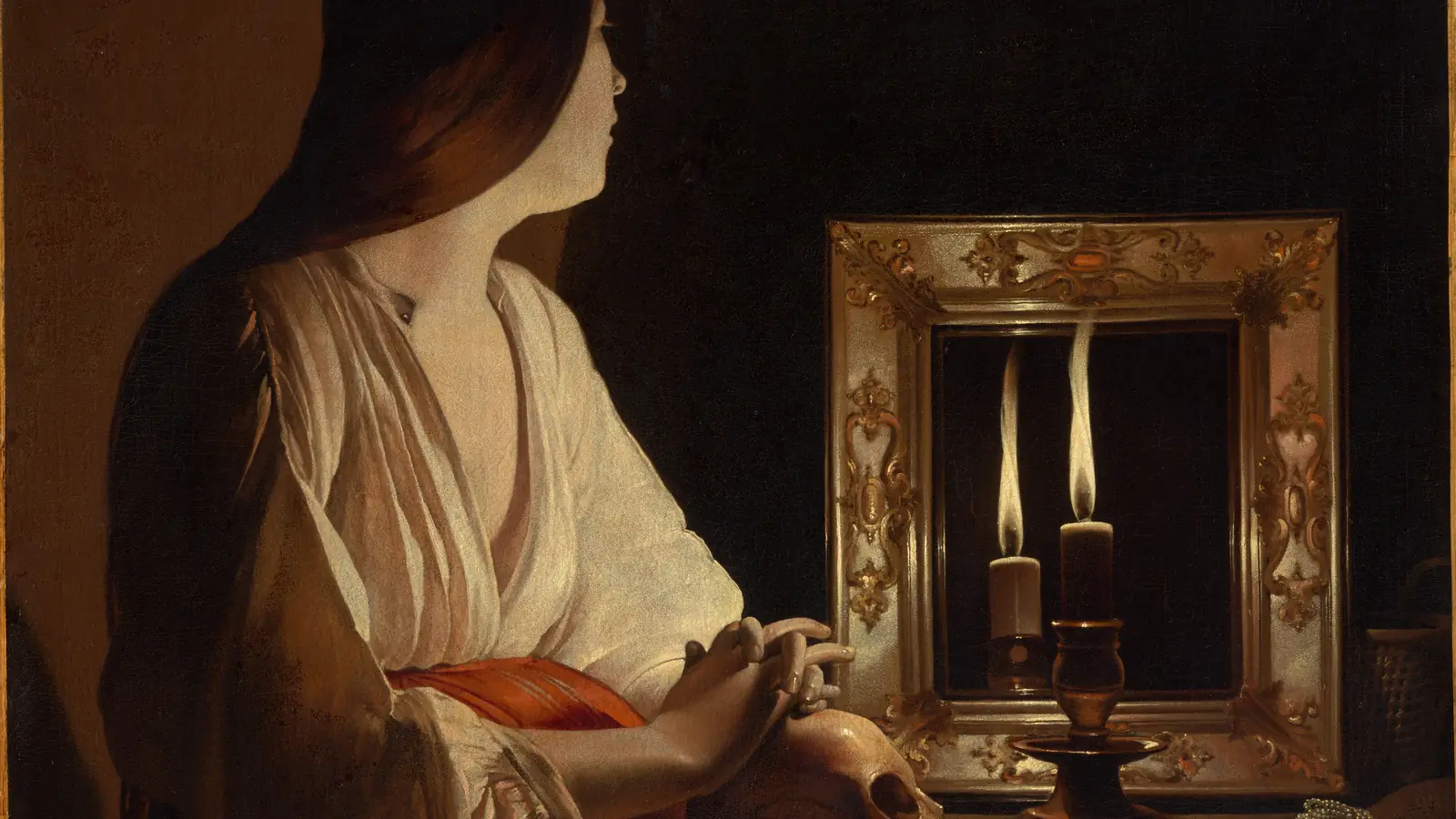
BACKGROUND · GEORGES DE LA TOUR, THE PENITENT MAGDALEN, C. 1640 · THE MET, OPEN ACCESS
Why this exists: many famous Stoic quotations are not in the texts at all. See Your fears, answered by the Stoics and Did they really say that?
All 28 passages
Marcus Aurelius · Meditations, trans. George Long
-
Begin the morning by saying to thyself, I shall meet with the busybody, the ungrateful, arrogant, deceitful, envious, unsocial.
He goes on: none of them can harm him, and he cannot be angry with them, because they are his kin.
-
It is in thy power whenever thou shalt choose to retire into thyself.
Said against people who look for retreats in the country, by the sea or in the mountains.
-
Take away thy opinion, and then there is taken away the complaint, "I have been harmed." Take away the complaint, "I have been harmed," and the harm is taken away.
-
Do not act as if thou wert going to live ten thousand years. Death hangs over thee. While thou livest, while it is in thy power, be good.
-
Be like the promontory against which the waves continually break, but it stands firm and tames the fury of the water around it.
-
Such as are thy habitual thoughts, such also will be the character of thy mind; for the soul is dyed by the thoughts.
-
The mind converts and changes every hindrance to its activity into an aid; and so that which is a hindrance is made a furtherance to an act …
This is the passage behind "the obstacle is the way", which is a modern translation's phrasing.
-
The best way of avenging thyself is not to become like [the wrong-doer].
The square brackets are Long's: he supplies words the Greek implies.
-
Look within. Within is the fountain of good, and it will ever bubble up, if thou wilt ever dig.
-
The perfection of moral character consists in this, in passing every day as the last, and in being neither violently excited nor torpid nor playing the hypocrite.
The popular "live each day as if it were your last" drops the second half, which asks for calm, not urgency.
-
If thou art pained by any external thing, it is not this thing that disturbs thee, but thy own judgment about it. And it is in thy power to wipe out this judgment now.
The real passage behind the popular "you have power over your mind, not outside events", which is not in the Meditations.
-
No longer talk at all about the kind of man that a good man ought to be, but be such.
-
I have often wondered how it is that every man loves himself more than all the rest of men, but yet sets less value on his own opinion of himself than on the opinion of others.
Epictetus · Enchiridion, trans. Thomas Wentworth Higginson
-
There are things which are within our power, and there are things which are beyond our power.
The first line of the handbook. Within our power, he says, are opinion, aim, desire and aversion; beyond it are body, property, reputation and office.
-
Men are disturbed not by things, but by the views which they take of things.
-
Demand not that events should happen as you wish; but wish them to happen as they do happen, and you will go on well.
-
Sickness is an impediment to the body, but not to the will unless itself pleases.
A claim about what stays yours, not advice about illness.
-
Never say of anything, “I have lost it,” but, “I have restored it.”
-
If you would improve, be content to be thought foolish and dull with regard to externals.
-
When, therefore, anyone provokes you, be assured that it is your own opinion which provokes you.
-
Be mostly silent, or speak merely what is needful, and in few words.
Seneca · Letters to Lucilius, trans. Richard M. Gummere
-
Hold every hour in your grasp. Lay hold of to-day’s task, and you will not need to depend so much upon to-morrow’s.
-
Nothing, Lucilius, is ours, except time.
-
Everywhere means nowhere.
Said about reading: stay with a few authors rather than skimming them all.
-
Associate with those who will make a better man of you. Welcome those whom you yourself can improve. The process is mutual; for men learn while they teach.
-
There are more things, Lucilius, likely to frighten us than there are to crush us; we suffer more often in imagination than in reality.
"More often": a claim about how frequently fear outruns the facts, not a promise that every fear is groundless.
-
Some things torment us more than they ought; some torment us before they ought; and some torment us when they ought not to torment us at all.
-
You need a change of soul rather than a change of climate.
Written to someone who had travelled far and still could not shake off his gloom.
How these were checked: each line was matched word for word against the translation it is credited to — George Long's Meditations and Thomas Wentworth Higginson's Enchiridion on Project Gutenberg, and Richard M. Gummere's Letters to Lucilius on Wikisource. An ellipsis (…) marks a cut. Square brackets are the translator's own. Older translations say "thou" and "men"; we have left them as printed.