HACKS VITAE

SERIES · REAL OR MYTH

Real or Myth?
14 Popular Claims, Checked

Fourteen claims you have probably heard, from sharks that must keep swimming to Einstein failing maths, each traced to the earliest and most reliable source we could find.

HOVER A GLOWING POINT · DRAG TO TURN
  • Myth 9
  • Partly true 3
  • True 1
  • Unverified 1
Published
September 16, 2026
Updated
September 30, 2026
Read
5 min
points
14

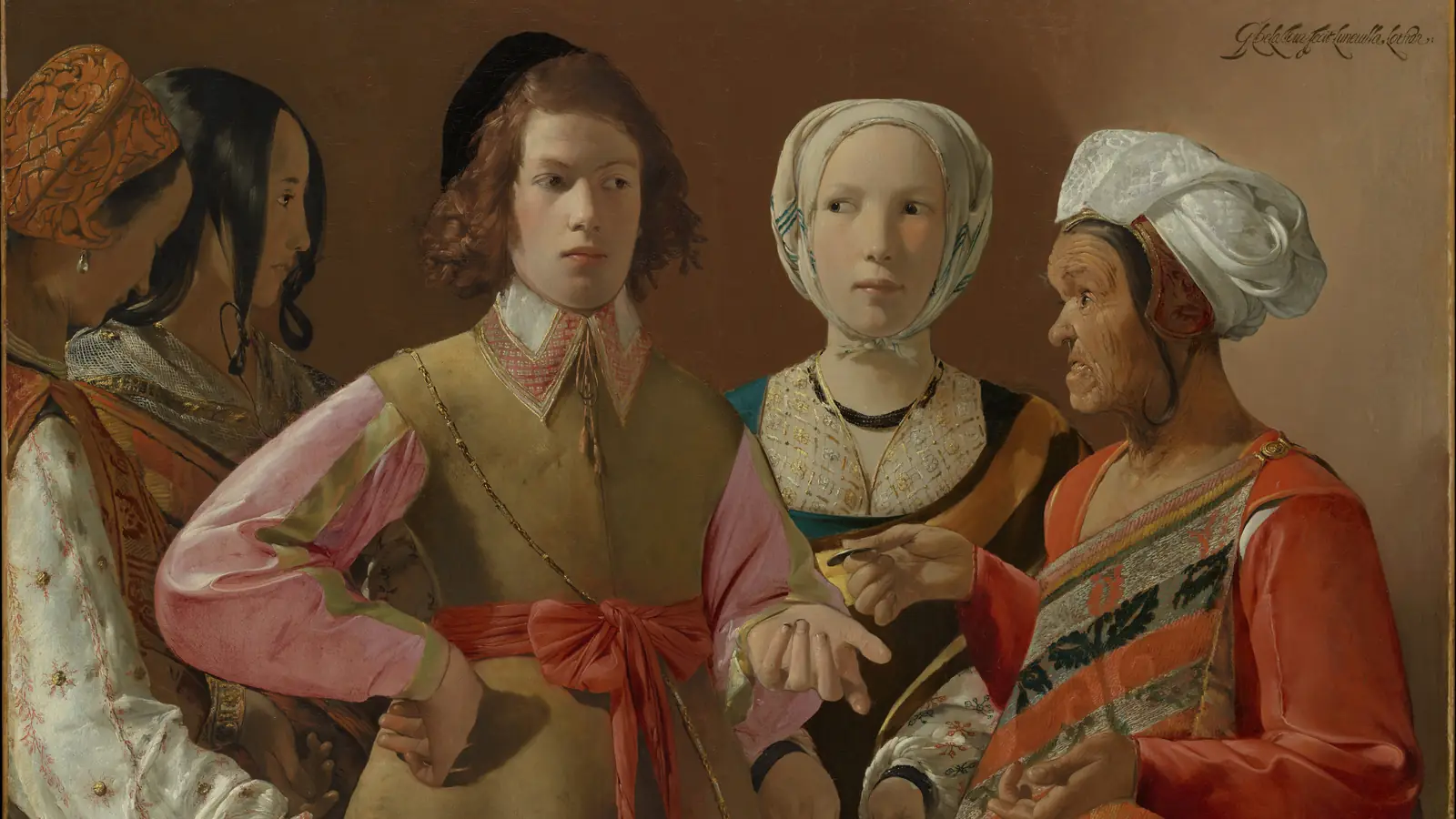
BACKGROUND · GEORGES DE LA TOUR, THE FORTUNE-TELLER, PROBABLY 1630S · THE MET, OPEN ACCESS

THE SHORT VERSION

  1. Fourteen popular claims, checked one at a time. Nine are myths, three are partly true, one cannot be settled, and one holds up.
  2. The spider claim does not hold up, and neither does the story about who invented it. The columnist said to have made up the statistic in 1993 does not exist; her name is an anagram of this is a big troll.
  3. Einstein did not fail maths. Shown the claim in 1935, he said he had mastered calculus before he was fifteen, and his 1896 school certificate gives him the top mark in algebra, geometry and physics.
  4. Some claims are half right, which helps them last: bison do face into storms and milk is usually at the back of the shop, but the reasons attached to them are unproven or argued both ways.

What we found

Our reading of the evidence on each of the 14 points, with where it comes from. Open any row, look at the source, and make up your own mind.

Partly trueSharks die if they stop swimming

True only for the sharks called obligate ram ventilators, which include great whites, makos and whale sharks: they have lost the ability to pump water over their gills, and would die from lack of oxygen if they stopped swimming. Sharks such as nurse and bullhead sharks use their mouth muscles to draw water over their gills, so they can breathe while lying still. Some, such as the tiger shark, can switch between the two.

SOURCE Joseph Castro, Live Science, 29 May 2013.

MythYou swallow eight spiders a year in your sleep

Swallowing one is possible, but "it would be a strictly random event". A sleeping person breathes, has a beating heart and may snore, all of which make vibrations that warn spiders off. The correction has its own twist. The story that the statistic was invented in 1993 by a columnist called Lisa Birgit Holst, writing in PC Professional, is also made up: the magazine and the columnist do not exist, and her name is an anagram of this is a big troll.

SOURCE Scientific American, quoting Rod Crawford of the Burke Museum; Snopes, on the invented origin story.

MythThe Great Wall of China is visible from space

Generally not to the unaided eye from low Earth orbit. One of its wider parts might be about ten metres across, and NASA's chief scientist for Earth observation said the wall's materials are "similar in color and texture" to the land around it. Yang Liwei, China's first astronaut, flew on Shenzhou 5 in October 2003 and said afterwards that the Earth looked "very beautiful", but "I did not see the Great Wall from space." A NASA astronaut later photographed sections of it from the space station with a 180mm lens; he said he did not see it himself.

SOURCE People's Daily, 17 October 2003; NASA, 9 May 2005; Phil Plait, Scientific American, 2024.

MythEinstein failed maths at school

Shown the claim in a newspaper column in 1935, he replied: "I never failed in mathematics. Before I was fifteen I had mastered differential and integral calculus." His school-leaving certificate from Aarau, dated 3 October 1896, gives him a 6, the top mark, in algebra, geometry, descriptive geometry and physics. He did fail the entrance exam for the Zurich Polytechnic in 1895, but on the non-science subjects, French especially, and he was two years younger than the other applicants.

SOURCE Walter Isaacson, TIME, 2007; his 1896 certificate; ABC Science, 2004.

MythMarie Antoinette said "let them eat cake"

The line is in Rousseau's Confessions, Book VI, where he recalls the saying of "a great princess" who, told that the peasants had no bread, answered qu'ils mangent de la brioche: let them eat brioche. He names no princess. He wrote that part around 1767, and Marie Antoinette only came to France from Austria in 1770.

SOURCE Rousseau, Confessions, Book VI; The Phrase Finder.

MythBulls charge because they see red

Cattle have two kinds of colour-sensing cone, not three: they are dichromats, and colour-blind to red. What draws the charge is the movement of the cape. Bulls charge the larger cape, the capote, just as hard, and it is magenta on one side and gold or blue on the other. In a 2007 television test, a bull went after two moving cowboys and left alone a person in red who stood still.

SOURCE Jacobs, Deegan and Neitz, Visual Neuroscience, 1998; Live Science.

MythVikings wore horned helmets into battle

The only Viking-age helmet preserved whole, from a warrior's grave at Gjermundbu in Norway, has no horns, and no contemporary source mentions Vikings wearing horned headgear, according to the National Museum of Denmark. The museum does note horned figures in some art of the period, and that such headgear may have been worn for display or ritual; in battle, it says, horns "would get in the way". The popular image took off in 1876, when Carl Emil Doepler designed the costumes, horned helmets included, for Wagner's Der Ring des Nibelungen at the Bayreuth Festival.

SOURCE National Museum of Denmark; Snopes; museum-digital on Doepler.

MythGoldfish have three-second memories

In experiments at the University of Plymouth, goldfish learned to push a lever for food, and when the lever worked for only one hour a day, they learned to press it at the right time. They can keep memories for at least three months. None of the sources we read points to any study that found three seconds.

SOURCE BBC Wildlife (Discover Wildlife).

Partly trueMilk is at the back of the shop so you walk past everything

Milk is usually at the back. Why is argued both ways. A dairy buyer told NPR's Planet Money in 2016 that it is there "because that's where milk comes in", so the cold chain is never broken, and called the walk-past-everything idea "a consumer misconception". On the same programme the food writer Michael Pollan argued that shops are laid out to make you cover ground, and a supermarket consultant called the walk past other goods a "side benefit". Both reasons can be true at once.

SOURCE NPR, Planet Money, episode 555, 21 September 2016.

Partly trueBison run into storms to get through them faster

The behaviour is real; the reason is not shown. Bison face into winter storms, while cattle tend to drift with the wind and can end up trapped in the corners of fenced pastures. A bison specialist told Snopes that bison face into the storm more than they walk into it, and there is no evidence that they know it gets them through faster. The Canadian Bison Association's explanation is insulation: facing the storm keeps snow and cold air from blowing under their coats.

SOURCE Snopes (rated it a mixture).

UnverifiedNapoleon said never to interrupt an enemy who is making a mistake

The idea has been credited to him for a long time, but no record from Napoleon himself has turned up. The earliest version we found is in 1827, in a life of Napoleon that the Swiss general Antoine-Henri Jomini wrote in Napoleon's own voice: quand l'ennemi fait un faux mouvement, il faut se garder de l'interrompre (when the enemy makes a false move, take care not to interrupt him). Archibald Alison's 1836 history, citing Jomini, turned it into dialogue: "when the enemy is making a false movement we must take good care not to interrupt him." The wording "making a mistake" is attributed to him in print by 1888. One fact-check rates the attribution correct on the strength of the 1827 book; we leave it unverified because that book was written by Jomini, in Napoleon's voice, not by Napoleon.

SOURCE Jomini, 1827; Alison, 1836; Quote Investigator; Snopes.

MythLightning never strikes the same place twice

It often strikes the same place again and again, especially tall, pointed, isolated objects. The US National Weather Service says the Empire State Building is hit an average of 23 times a year.

SOURCE US National Weather Service, "Lightning Myths".

MythWe only use 10% of our brains

"We use virtually every part of the brain, and that [most of] the brain is active almost all the time," the Johns Hopkins neurologist Barry Gordon told Scientific American. The brain is about three percent of body weight and uses about 20 percent of the body's energy. The same article allows that at a given moment of rest only a small part may be busy; the myth is that the rest is never used.

SOURCE Scientific American, quoting Barry Gordon.

TrueHoney never spoils

This one holds up. Honey is very low in water, acidic (a pH of roughly 3 to 4.5), and contains small amounts of hydrogen peroxide made by an enzyme from the bees, so very little can grow in it. "As long as the lid stays on it and no water is added to it, honey will not go bad," Amina Harris of the Honey and Pollination Center at UC Davis told Smithsonian. It can crystallise; that is not spoiling. One caveat that matters: the NHS says not to give honey to babies younger than 12 months, because it can contain the bacteria that cause botulism.

SOURCE Smithsonian, 2013; NHS, "Botulism".

THE ARTICLE · 5 MIN

Some facts get repeated so often that they feel checked. They arrive in a numbered carousel, they sound like the sort of thing that would be true, and they can go round for years before anyone asks where they came from.

We took fourteen of them and looked for the earliest and most reliable source we could find for each.

Nine are myths. Three are partly true. One cannot be settled either way. One holds up. The partly-true ones are the most interesting, because a half-right claim lasts much longer than a wrong one: there is always something real underneath to point at.

How to read the sheet

Every row opens. Inside is what the sources say and where they come from.

  • True: it holds up.
  • Partly true: something real is in there, but the popular version has added or changed something that matters.
  • Unverified: no record we could find settles it either way.
  • Myth: it does not hold up.

The one that is really about all the others

The spider claim is worth singling out, because it is the whole problem in miniature.

The claim itself has nothing behind it. Rod Crawford, the arachnid curator at the Burke Museum in Seattle, told Scientific American that “a sleeping person is not something a spider would willingly approach”. Swallowing one is possible, but, as the same article puts it, “it would be a strictly random event”.

Then there is the correction you may have heard: that the “eight spiders a year” statistic was invented in 1993 by a columnist named Lisa Birgit Holst, writing in a magazine called PC Professional, to show that people will repeat anything they read.

That story is also made up. The fact-checking site that first told it now says that “PC Professional” and the columnist “do not exist”, that her name “is an anagram of the phrase ‘this is a big troll’”, and that the story was planted in April 2001 as a joke for its long-time readers. The spider claim was already going round before that: the same page quotes a 1999 trivia list that has a version of it.

So a made-up fact picked up a made-up origin story about made-up facts. The second story is satisfying to pass on, because telling it casts the teller as the one who knew better.

It is easy to relax once a claim seems to have been seen through; that is when the second story slips in.

What the partly-true ones have in common

Look at the three together and the same shape appears each time.

  • Some sharks do die if they stop swimming. What was added is the word sharks, with no qualifier.
  • Bison do face into storms. What was added is the reason: that they know it gets them through faster.
  • Milk is usually at the back of the shop. The intent behind that is argued both ways, even by people who work in the trade.

In each case the core is a fact, and the addition is the part nobody has shown. The addition is what makes it shareable, which may be why it is the part that gets added.

The Napoleon line has a related shape. The idea has been credited to him since at least 1827, but the earliest book we found that does so was written in his voice by someone else, and the snappy wording came decades later.

How to check one yourself

  • Ask what the original source would even look like. “Goldfish remember for three seconds” would need someone to have tested goldfish memory and found three seconds. The tests that have been done found memories lasting months.
  • Search for the earliest version, not the most popular one. Sort by date. If the oldest version you can find is only a few years old, it is not ancient wisdom.
  • Take a second look at claims that come with a moral. A fact that also happens to be good advice has had a reason to be improved.
  • Check the correction as carefully as the claim. The spider story is the reason.

Sources

Each row above names its own source. In full:

Checked September 2026. Where a claim could not be settled, it is marked rather than guessed at. If you can show any of these wrong — with a source — we want to see it: hacksvitae@gmail.com

Related: Did They Really Say That? 22 famous quotes, checked against the source · Older Than You Think · Overcoming survivorship bias

  • real or myth
  • fact check
  • myths
  • cheat sheet
  • misconceptions
  • science
  • history

SHARE & CITE

Hacks Vitae. "Real or Myth? 14 Popular Claims, Checked." September 16, 2026. https://www.hacksvitae.com/life-hack/real-or-myth-14-things-the-internet-keeps-repeating

That's what we found. The rest is your call.

118 articles, each with its sources listed. Spotted something off? hacksvitae@gmail.com

Open the library